

During our yearly Hungarian Heritage Festival (HunFest) we always offer traditional Hungarian food for lunch and yummy home-made pastries for desert.
Hungarian cuisine is known all over the world, and chances are, most of those who come to our Festival are here primarily for food and pastries.
We will cover the pastries in a separate post – they deserve a spot of their own – so in this post we will talk about traditional Hungarian food offerings you can usually buy for lunch at our HunFest.
The following are only a few of our offerings.
Traditional Hungarian Gulyás
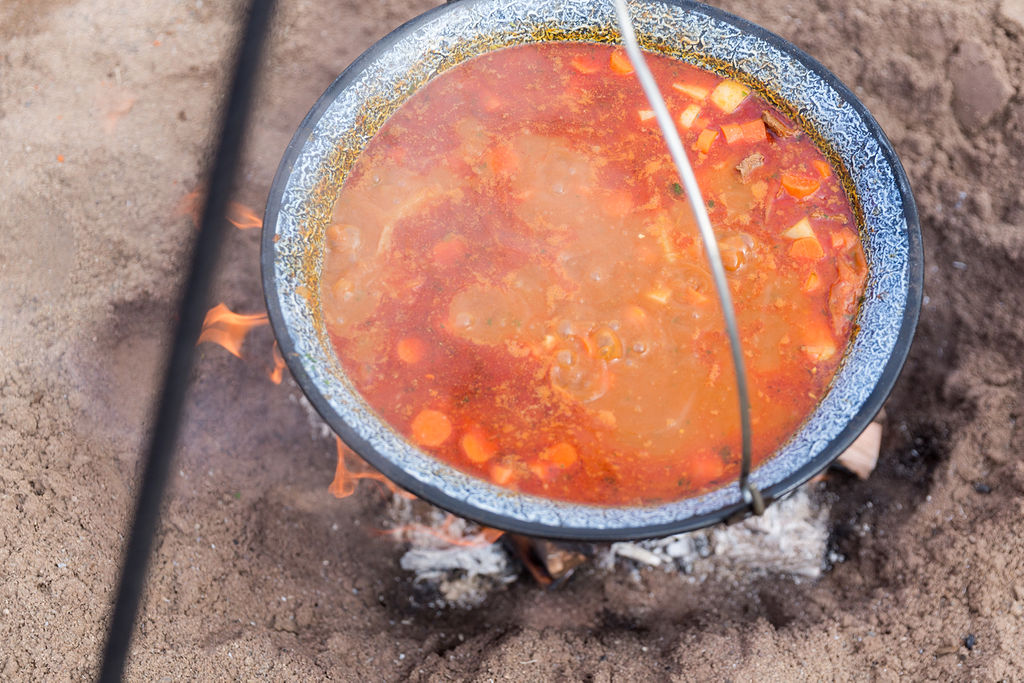
It might be a tongue-twister for some, but it is actually easy to say gulyás instead of the translated version, goulash. Try pronouncing it when ordering: [gouyash].
Did you know that the term gulyás also means herdsman? The original meal of gulyás, as leves (soup) or stew, was made and eaten by Hungarian herdsmen. The meals origins are traced at least as far back as the 10th century, when the herdsmen cooked and flavoured the meat of their cattle.
At the time, they made enough that after one meal, they sundried the cooked and flavoured meat and packed them into bags made from the stomach lining of sheep or cattle, to last longer. They only needed to add water to have a meal later on.
Of course, these days we can freeze the gulyás if we don’t eat it right away, but I haven’t met anyone who needs to do that; Hungarian gulyás is so tasty, it always disappears.
Main ingredients in gulyás: beef, onion, garlic, tomato, peppers, carrots, parsnips, celery root, potato, sweet paprika, salt, pepper, cumin, bay leaves, parsley, and oil to cook with. Its secret lies in the spices, heavy on Hungarian paprika, and the way it is slow cooked.
Csirke Paprikás
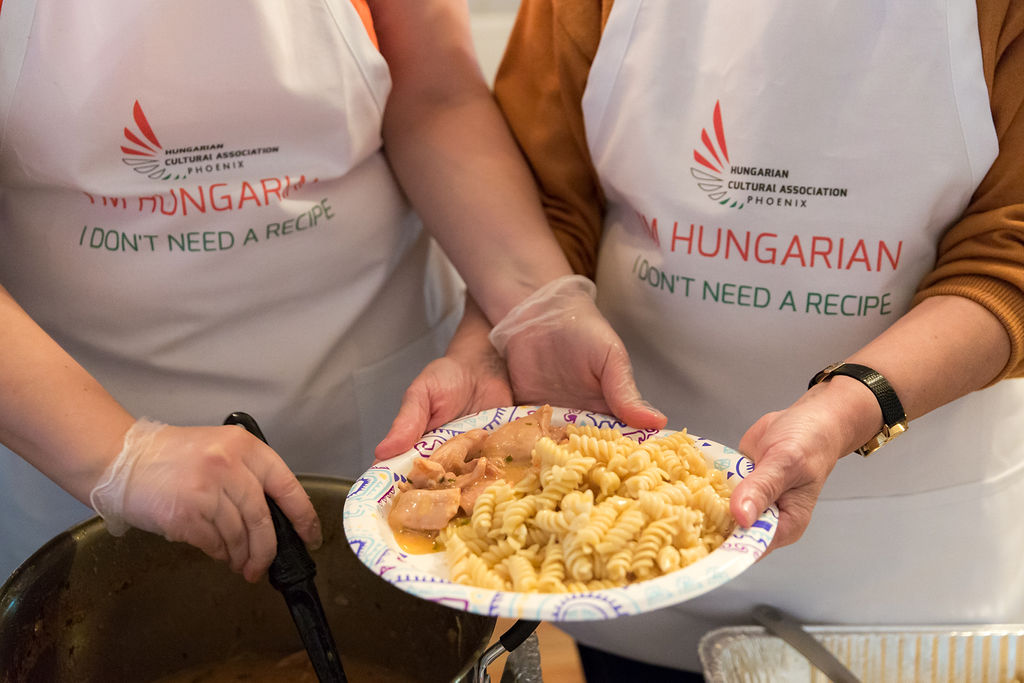
If there is a dish besides gulyás that everyone recognises as authentically Hungarian, it is chicken paprikás, csirkepaprikás.
Its two main ingredients, chicken (our most popular poultry) and paprika, define Hungarian gastronomy.
As opposed to gulyás, csirke paprikás is a realtively new addition to the Hungarian cuisine, dating from the 1800s. Pörkölt was popular among the peasants of the Great Hungarian Plains. Later some people added sour cream to it, and eventually, by 1834, the started offering it as “tejfölös paprikás csirke” in restaurants.
But what’s the difference between csirkepaprikás and csirke pörkölt? The sour cream, of course. Although everyone might recognise the name chicken paprikash, not many know about pörkölt. Pörkölt can be made with any meat, but if made with chicken, adding sour cream to it turns it into paprikás.
Today csirkepaprikás or paprikás csirke is one of the best-known and most beloved Hungarian meals. And you have the opportunity to try it at our HunFest.
Hungarian Stuffed Cabbage – Töltött Káposzta

Many nations make stuffed cabbage, especially in Eastern Europe. And they each have their specific ways to make it.
The Hungarian stuffed cabbage is made of ground pork (sometimes a combination of ground pork and beef) and rice, encased in sour cabbage, and cooked in tomato sauce and sauerkraut. It is usually served with sour cream.
Ingredients in the Hungarian stuffed cabbage include besides the cabbage, ground pork, and sauerkraut: onion, rice, paprika powder, black pepper, salt, and oil.
Lecsó – Vegetable Stew
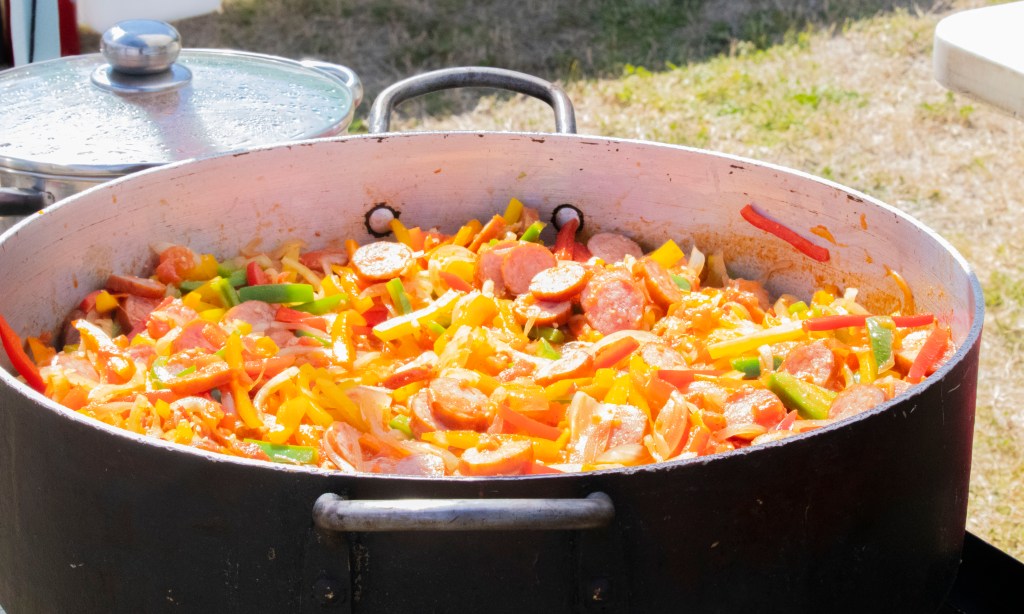
The traditional Hungarian lecsó is a basic, simple and flavorful vegetable stew, with its main ingredients pepper, onions, and tomatoes. The traditional lecsó is made with Hungarian peppers, the light green pointed peppers you can find in some grocery stores, at least on occasion.
Lecsó is one of those dishes that the Hungarian saying “Ahány ház annyi szokás” (every house has its own traditions) is most true. However, everyone agrees on the base of lecsó, and the basic way it is made.
Easy to make when the right vegetables are in season, it is a popular home-made dish.
Though it could stand as a vegetable dish on its own right, Hungarian lecsó is most often cooked with added sausage. This is how we usually serve it at HunFest, as well.
Lecsó is known to become a favorite dish for everyone who tastes it. If you haven’t had it yet, try it, and see what you think.
Vegetarian Meals
Hungarian cuisine is heavy on meat, however, some of our traditional dishes have vegetarian options. We usually offer some of these at our Festival.
Chicken paprikás has a vegetarian version, using mushrooms instead of chicken, resulting in gomba paprikás. It uses the same spices and vegetables, so the taste is similar, but replaces the meat with mushrooms.
Lecsó in its original form is a vegetarian dish, and we often offer it at our Festival.
Cabbage pasta is vegetarian as well. This is a dish containing sautéd cabbage seasoned with salt and pepper. It is served mixed with pasta.
Historically, few people were choosing vegetarian meals, so compared to our other offerings, we usually have fewer offerings.
 HUNGARIAN FESTIVAL ARIZONA
Leave a comment